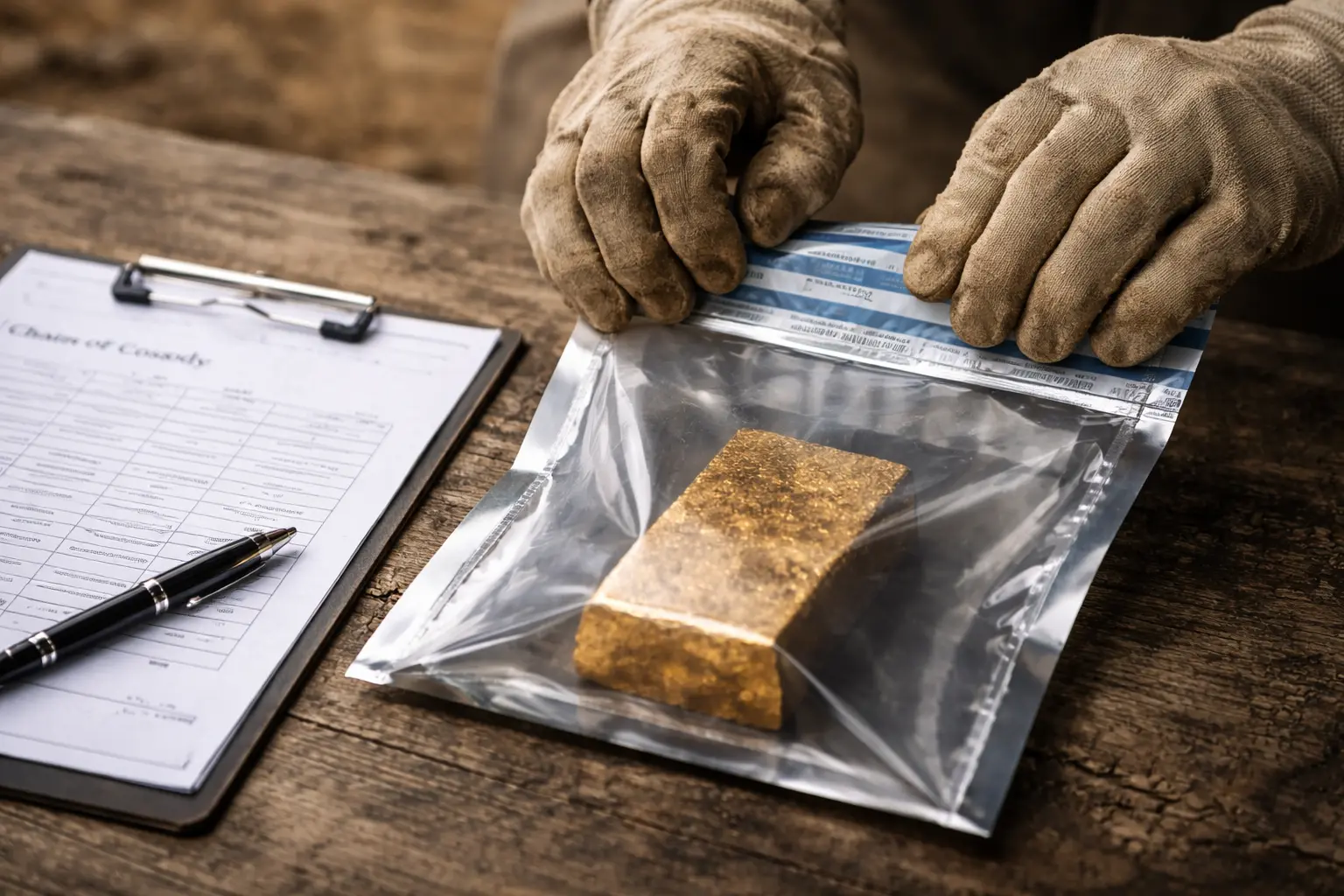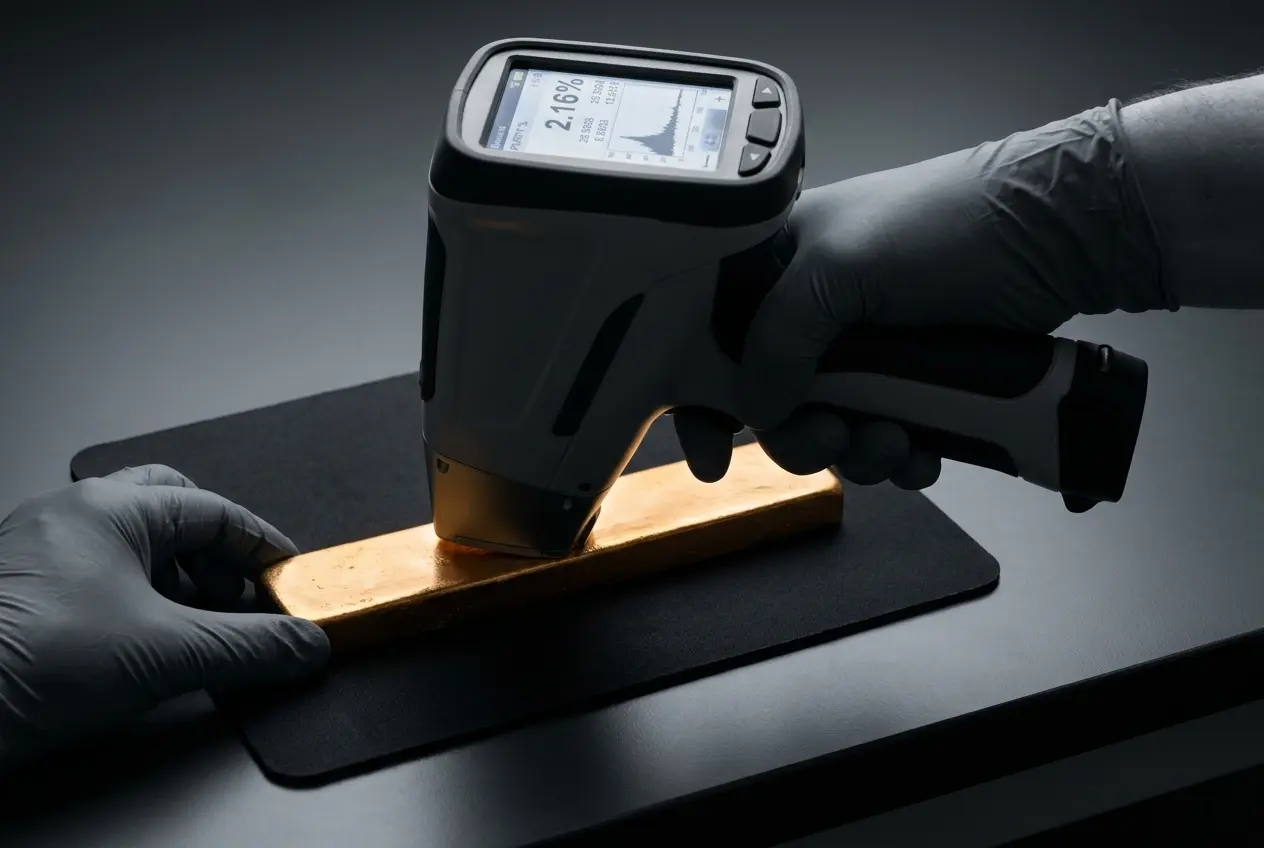
very bar that leaves our vault has been assayed by two reference methods: fire assay (cupellation) and ICP-OES (inductively coupled plasma optical emission spectroscopy). We are often asked why we run both. The short answer is that they measure different things, and for a bar that is going to be sold to an institutional buyer, you want both answers on the same certificate.
Fire assay: what it measures.
Fire assay is the reference method for gold purity in the international bullion trade. It measures the gold content of a representative sample by physically separating the gold from every other element in the sample via a sequence of fusion, cupellation, and parting. The final number is a direct mass measurement of the gold that came out of the sample. It is as close to a physically grounded truth as the industry has.
ICP: what it measures.
ICP-OES measures the concentration of individual trace elements in the sample — silver, copper, iron, platinum-group metals, and anything else present above the detection limit. It does not produce the gold number directly in the way fire assay does. What it produces is the full fingerprint of everything else in the bar, which lets us confirm the gold number by subtraction and — just as important — verify the metallurgical provenance of the material.
“Fire assay tells you how much gold is in the bar. ICP tells you what story the bar has been through.”
Running both is not redundant. Running both means we can sign two different certifications on the same certificate and have them cross-verify. If the gold number from fire assay does not reconcile against the subtraction from ICP to the fourth decimal place, we do not issue the certificate.